
Managing multiple venues: Challenges and solutions
By Equimise Team
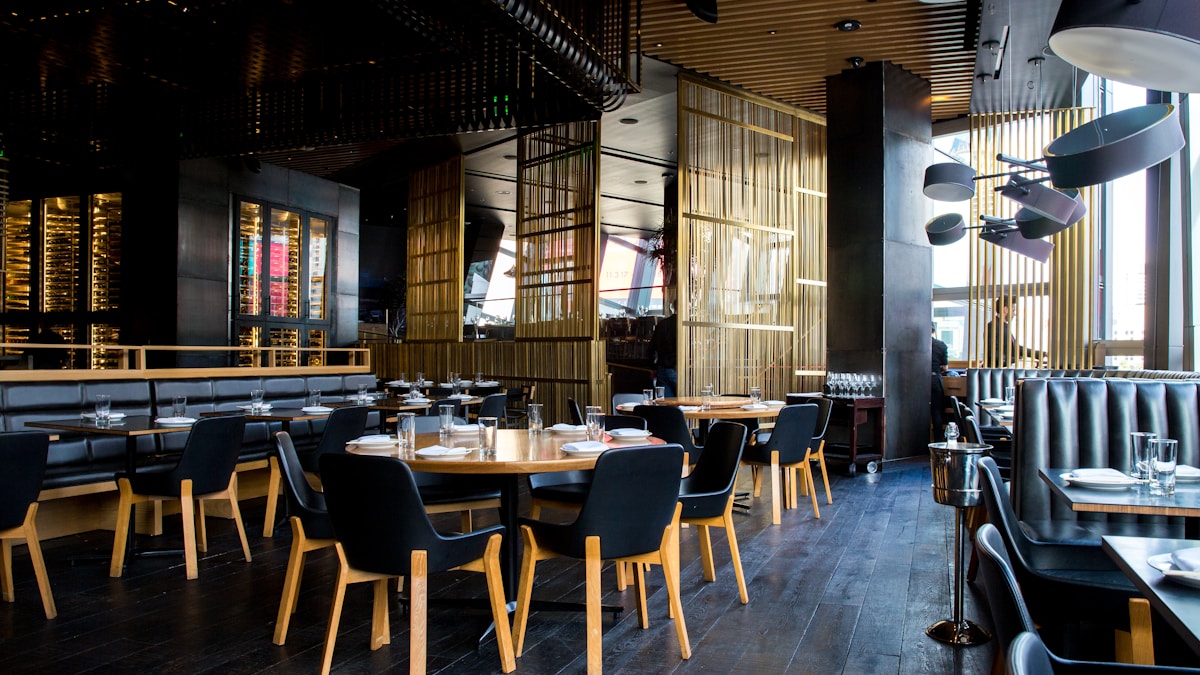
Opening a second location feels like progress. Opening a third feels like chaos. By the time you hit four or five venues, you're spending more time putting out fires than running your business.
The challenges of multi-site operations aren't obvious until you're in them. What worked perfectly at one site fractures when replicated across three, five, or ten locations. Here's what breaks, why it breaks, and how to fix it before it drains your time and margin.
The visibility problem: You can't see what you can't measure
At one location, you walk the floor daily. You notice when the walk-in is overstocked, when portioning is inconsistent, when a manager is ordering off-spec. Your presence is the control system.
At five locations, you can't be everywhere. And if each site reports differently (or doesn't report at all), you're flying blind. One venue might be hitting 28% COGS while another bleeds at 38%, and you won't know until end-of-month financials arrive. By then, you've lost weeks of margin.
The solution: Centralised, real-time reporting. Every venue should report the same metrics in the same format, daily. COGS, waste by category, sales per labour hour, variance against budget. If you can't pull up a dashboard and see all sites side by side, you don't have visibility. You have guesswork.
💡 Pro tip
Set up weekly scorecards for each venue. Track COGS %, waste as % of purchases, and labour cost per cover. Standardise the reporting format so you can compare apples to apples. Any venue that's an outlier gets immediate attention.
Centralised vs decentralised purchasing: There's no one-size-fits-all
Should each venue order independently, or should head office control all purchasing? The answer depends on your model.
Centralised purchasing works when:
- You have volume leverage with suppliers (better pricing at scale).
- Menus are identical or near-identical across sites.
- You have logistics to distribute bulk orders efficiently.
- Your venues are within a tight geographic area.
Decentralised purchasing works when:
- Each venue has unique menu items or local sourcing needs.
- Sites are spread across regions with different supplier ecosystems.
- You trust your site managers and want to empower decision-making.
Most operators land somewhere in the middle: core items (proteins, dry goods, beverages) are centralised for pricing power, while produce and speciality items are ordered locally for freshness and flexibility.
📊 Real Example
A five-venue burger group switched to centralised ordering for beef, buns, and cheese, negotiating a 12% price drop with their main supplier. They kept produce decentralised so each venue could work with local farms. Result: Lower COGS, better supplier relationships, and local menu specials that drove foot traffic.
Consistency is your brand: Menus, standards, training
Customers expect the same experience at every location. A burger at your Bondi site should taste identical to one at your Newtown site. If it doesn't, you've broken trust.
Consistency starts with documentation. Every recipe should be written down with exact quantities, prep methods, and plating instructions. Every standard operating procedure (opening checklist, cleaning protocols, ordering workflow) should be documented and accessible.
Where consistency breaks:
- Recipe drift: A chef at Site B starts free-pouring because "it's faster." Within a month, portioning is inconsistent and costs are up 15%.
- Training gaps: New staff at Site C never get proper onboarding because the manager is too busy. Quality suffers.
- Menu divergence: Site A adds three specials that become permanent. Site B keeps the old menu. Customers are confused.
The fix: Centralised training materials, regular audits, and a culture of accountability. Use checklists, video training modules, and quarterly recipe refreshers. Make it easy for staff to do the right thing.
Consolidated reporting: The only way to spot problems early
Spreadsheets don't scale. If you're collecting data from five venues via email, WhatsApp, and handwritten logs, you're already losing.
You need a single source of truth. All inventory movements, invoices, waste logs, and sales data should flow into one system. This gives you:
- Real-time visibility: See today's COGS across all venues by 10am.
- Variance alerts: Get notified when a site's waste spikes or COGS climbs above target.
- Comparative analysis: Identify top performers and laggards. Why is Site A at 27% COGS and Site D at 34%? Drill down and find out.
- Faster decision-making: No more waiting for month-end reports. Fix problems this week, not next quarter.
💡 Industry tip
Set up automated alerts for key thresholds. If any venue's COGS exceeds 32%, you get a notification. If waste at a site doubles week-over-week, you're alerted immediately. Reactive management becomes proactive management.
Supplier management at scale: Negotiation power and relationship strain
More venues mean more buying power, but only if you consolidate spend. If each site orders from different suppliers, you're leaving money on the table.
How to optimise supplier relationships:
- Consolidate where possible: Use one supplier for proteins, one for produce, one for dry goods. Negotiate volume discounts based on total group spend.
- Track performance: On-time delivery %, invoice accuracy, quality consistency. Drop suppliers who underperform.
- Build redundancy: Have a backup supplier for critical items. If your main protein supplier fails, you can't shut down all five venues.
- Automate ordering: Manual ordering across multiple sites is error-prone and time-consuming. Use systems that generate suggested orders based on pars and usage.
The negotiation leverage: If you're spending $200,000/month across five venues, you should be getting better pricing than a single-site operator spending $40,000. If you're not, renegotiate or switch suppliers.
Build systems before you need them
The biggest mistake multi-site operators make? Waiting until they're drowning to implement proper systems.
If you're planning to open a second or third venue, build the infrastructure now. Document your recipes. Set up centralised reporting. Choose software that scales. Train your managers on consistent processes.
Why this matters: You can't retrofit systems when you're already stretched thin. By the time you're managing four sites with spreadsheets and gut feel, you're in crisis mode. Every day you delay costs you margin, time, and sanity.
Start small. Implement one system at a time. Get it working at your first venue, then roll it out. By the time you're at five venues, your operations should run smoother than they did at one.
Final thoughts: Control without micromanagement
The goal isn't to control every decision at every venue. It's to create systems that give you visibility, consistency, and accountability without micromanaging every order or shift.
Good systems empower your managers. They have the data they need to make smart decisions, and you have the oversight to intervene when something goes off-track. That's the balance that makes multi-site operations sustainable.
Ready to scale without the chaos?
Equimise gives you real-time visibility across all venues with consolidated reporting, automated ordering, and AI-powered insights. See how the system scales with your business.
Book a demoAbout the author: The Equimise team is dedicated to helping hospitality operators run smarter, waste less, and grow profitably with intelligent back-of-house systems.